







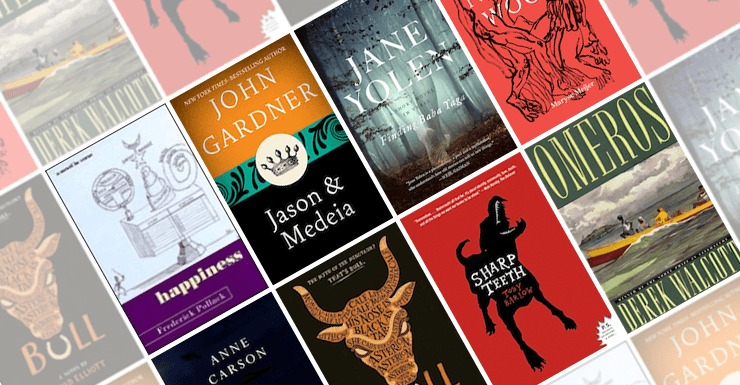
Sometimes there is a tale so epic, so lyrical, so otherworldly that plain old prose can’t do it justice! That is when serious writers break out the verse. We’ve collected eight books—some horror, some myth, one science fiction, and one YA—that use verse to pluck their readers away form the workaday world and into stories that bend reality.
Let us know if we’ve missed any of your favorites in the comments!
Finding Baba Yaga by Jane Yolen
Buy the Book
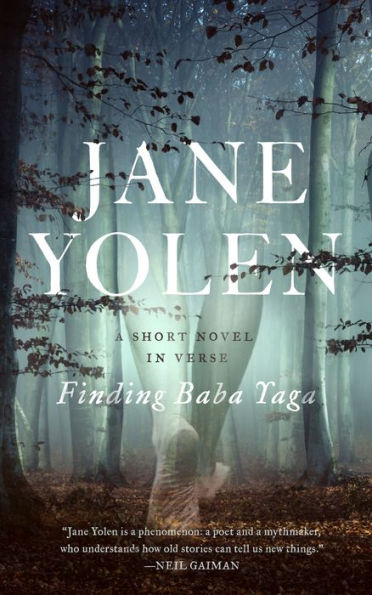
Finding Baba Yaga: A Short Novel in Verse
You think you know this story.
You do not.
Yolen concocts a heady mix of modern language and ancient lore in her verse adaptation of Baba Yaga. Natasha is a modern teen looking for an escape from an abusive homelife when she runs away to the forest and finds a little hut with chicken feet. The hut’s mistress, Baba Yaga, doesn’t mind Natasha’s feistiness or her foul mouth—on the contrary, she encourages those qualities.
As long as Natasha finishes all of her chores.
The tale follows Natasha as she grows into herself, and begins to feel unquantifiable feelings for her lovely blonde housemate, Vasilisa. Can she meet all of Baba Yaga’s demands? Can she free herself from her family? Can she accept herself as she truly is?
Jason and Medeia by John Gardner
Buy the Book
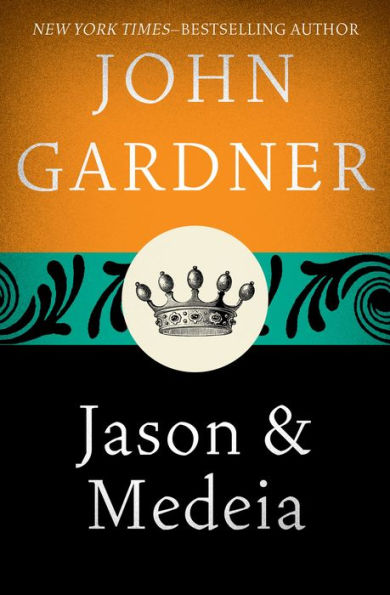
Jason & Medeia
John Gardner of Grendel fame recreates the story of Jason and Medeia in verse. Jason is exhausted by having to live in the palace of King Creon when his own kingdom, Iolcus, is under the rule of the despotic King Pelias. Luckily, Jason’s wife, Medeia, just happens to be a sorceress. She agrees to use her magic against Pelias, believing that she and Jason will then rule Iolcus together—but then Jason notices the young, malleable, and much less powerful Glauce, daughter of Creon. As you might imagine, things go south from there.
Gardner transforms the ancient Greek play into a verse novel full of romantic longing, betrayal, and fury.
Northwood by Maryse Meijer
Buy the Book
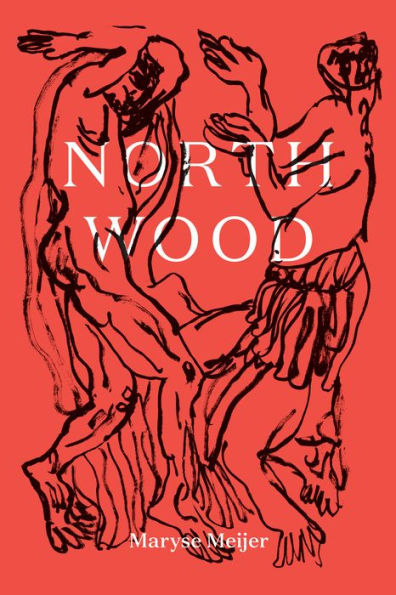
Northwood: A Novella
The upcoming Northwood is a genre-bending hybrid horror story that riffs on myths and classic fairy tales as it unfolds in short passages and verse. A woman goes to the forest to create her art, but soon finds herself entangled with a violent married man. Years later, she is attempting to return to life, but she can’t shakes the desire to run back to the forest, and the wolf she knew there. Her perception shifts and bends, reality warps, she can’t be sure whether she’s reliving tales she’s heard in her youth—or creating a new one.
Can she free herself and leave the wilderness behind? Does she even want to?
Autobiography of Red by Anne Carson
Buy the Book
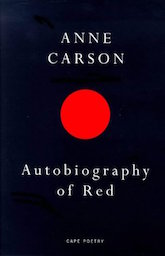
Autobiography of Red
Anne Carson’s Autobiography of Red is an exquisite love story that distills the pain and bliss of a first romance into one long, heartwrenching poem. Based extremely loosely on the Tenth Labor of Hercules, it follows a few years in the life of Geryon (who may or may not be a literal monster), an abuse survivor who falls in love with an older boy named Herakles. Sometimes Herakles seems to love Geryon; sometimes he seems to be toying with him. The two break apart and come back together, another young man named Ancash becomes involved, and there’s a highly symbolic volcano.
An absolute classic, Autobiography of Red is a swooning love ballad and a harsh look at trauma all wrapped up into one beautiful, utterly unique book.
Omeros by Derek Walcott
Buy the Book
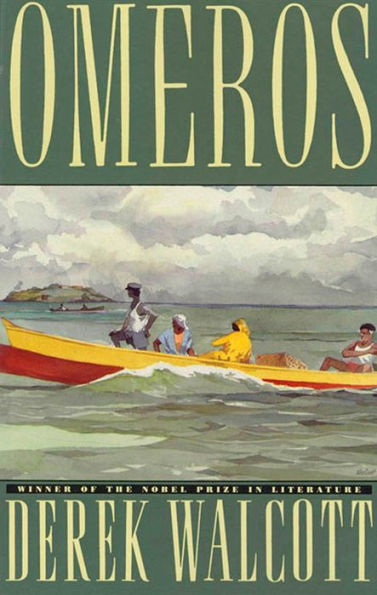
Omeros
In Omeros, Saint Lucian poet Derek Walcott gives us a massive, wide-ranging, multifaceted update on The Iliad. Walcott’s epic is divided across a number of narrators, including a fisherman named Achille, another man named Hector, an English officer and his wife, a maid named Helen, a blind poet called Seven Seas, and Walcott himself. The action moves between Saint Lucia, Brookline, Massachusetts, several European cities, and an African slave ship, with St. Lucia also being referred to as “Helen” at some points in the poem.
Several plots intertwine—one about the rivalry between Achille and Hector, on about the Major and his wife trying to reckon with the history of colonization, and their own roles as English people living in the Caribbean, and one somewhat autobiographical thread that tells Walcott’s own story.
Happiness by Frederick Pollack
Buy the Book
Happiness
Happiness is the rare science fiction tale told in verse. It looks at an attempt at a utopian revolution that goes about as well as those usually do. The universe turns inside out when Stephen Hawking creates a space-time inversion called “X-Day.” A wall forms between the old world—the one we’re living in now—and Ardena, a progressive paradise. Soon squads of Avengers banish bullies, racists, misogynists, climate-change deniers, and the like to the old world, while progressives clean up the environment and create art.
Obviously, the wall doesn’t hold, but it does last long enough for Pollack to create an interesting thought experiment in verse form.
Bull by David Elliott
Buy the Book
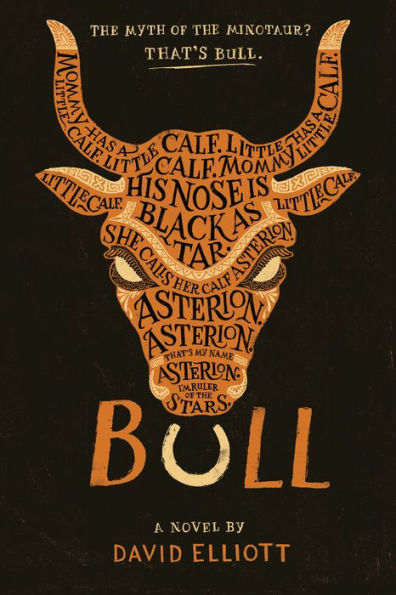
Bull
Minos thought he could
Pull a fast one
On me,
Poseidon!
God of the Sea!
But I’m the last one
On whom you
Should try such a thing.
The nerve of that guy.
The balls. The audacity.
I AM THE OCEAN!
I got capacity!
In this rollicking YA novel, David Elliott retells the tragedy of the Minotaur in a way that allows for both the bawdy humor and the pain that can be found in adolescence. He lets Poseidon, Minos, Daedalus, Pasiphae, Asterion, and Ariadne each speak for themselves in witty modern language as a counterpoint to the ancient tale. Poseidon creates problem after problem for Pasiphae, then mocks her by casting all women as crazy and sex-obsessed. Her son Asterion is one miserable minotaur, abused by Minos, imprisoned, with only his sister Ariadne taking his side on anything… until she meets a silver-tongued charmer named Theseus.
Sharp Teeth by Toby Barlow
Buy the Book
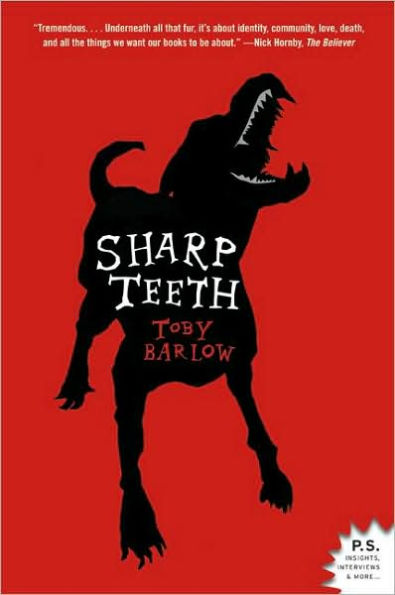
Sharp Teeth: A Novel
Love in the time of the Werewolf War! Lycanthropes are thriving in Los Angeles, ignoring moon phases and developing their ability to shift between their human and wolf forms as they choose, and convincing ever-growing numbers of the poor and homeless to their ranks. They are hellbent on wresting control of the city from rival packs…and maybe even from the humans.
Anthony is a lovesick dogcatcher. He has no clue that he’s caught in a war, or that the girl he’s fallen for is a werewolf who has spurned her pack for independence. Can she keep her dual nature a secret? Can their love possibly survive the war?
Did we miss any of your favorite tales in verse? Let us know in the comments—and don’t worry, telling us in regular old prose is fine.

Well, obviously: The Illiad, the Odyssey, and the Aenid.
The original Beren and Luthien (and many of the other tales of Beleriand) was written in verse form, and it’s very lovely :)
Cathy Park Hong has two good ones. Dance dance revolution is set in a near future multicultural desert city, written in an imaginary Creole. Engine Empire is about the wild west, a fabulist version of modern Shangdu, and future Silicon Valley. Both books are playful and disturbing at the same time.
@wiredog And Gilgamesh! And The Magic Doe and Ovid’s metamorphoisis and Beowulf and large chunks of midsummer night’s dream, the tempest and Macbeth.
The Lay of Leithian (i.e., Beren and Luthien) should obviously have the top spot here.
Both of the examples I thought of involve generation ships: Harry Martinson’s Aniara definitely counts while Heinlein’s Methuselah’s Children is an edge case as (according to Poul Anderson) over half of it is written in blank verse.
I’ve added Omeros to my reading list!
Wow, no one has mentioned Aniara by Harry Martinson. Martinson won the Nobel in literature. Is there any other SF by a Nobel laureate?
Aniara is magnificent. I first read it in the Avon SF edition, the MacDiarmid and Schubert translation.
https://www.goodreads.com/book/show/1138944.Aniara
Glad to see Aniara getting the love!
I searched it out after seeing it quoted and referred to by an old-school SF writer – perhaps Harry Harrison or Poul Anderson? – and found it well worth the read.
@8: Anderson and Vernor Vinge both referenced Aniara.
@6: yeah, Omeros is really interesting.
For my part, I’m wondering why I never read Autobiography of Red. On the list it goes.
Larry Niven once suggested that Dante’s Divine Comedy should be considered science fiction (even hard science fiction), since it was based on the very best understanding (of its time) of how the universe was constructed.
In a more recent vein: I haven’t read it yet, but Oliver Langmead’s Dark Star (2015) has gotten a lot of good reviews, and has been described as “a science fiction noir poem”.
Well, I just have to add The Star Bear Odyssey! It’s a haiku-horror picture story.
Frederick Turner has at least three sf verse novels: “Genesis,” ” Apocalypse, ” and “The New World.”
No mention of “A Midsummer Tempest” by Poul Anderson? Really??? That seems like a pretty large oversight to me.
@8
Aniara is amazing, but I’m not sure it’s in print any longer. It always makes me wonder if the writer of Crystal Gayle’s song “Do You Believe In Magic?” which refers to an out-of-control spaceship, was familiar with Ankara.
@7: Doris Lessing wrote some SF, I think. Also last year’s winner Kazuo Ishiguro.
Not really SF but speculative fiction is found in the works of Rudyard Kipling, Selma Lagerlöf, Günter Grass. There may be others that I’m not aware of.