







Bears are always on our minds. From teddy, who we snuggled up to as kids; to the eternal whimsy of Winnie-the-Pooh; and the bears we might “choose” over running into a strange man in the woods—the concept of the bear hibernates in the imagination, then rampages in fiction. Face it: the bear often chooses us.
Because of this early anthropomorphic education about bears, it can be tough to separate their cuddly appearance and bumbling antics from the truth that quite a few of them would claw the life out of us in the right (or wrong) circumstances. But that combination is one reason I wanted to include a bear in my upcoming dark fantasy Leave No Trace. In that book, Artio the bear—who has connections to Celtic mythology—looms large and also contains multitudes. Artio makes her own choices—and they have life-altering consequences.
But Artio is far from the only Very Important Bear in fiction. In science-fiction, fantasy and horror novels, bears speak, shape-shift, go to war (with their own armor) and can have long-lasting nightmares. Here eight of my favorite ursines, who’ve stealthily gathered in my unconscious for some time.
Shardik by Richard Adams

“Such a bear as never was, a bear tall as a dwelling-hut, his pelt like a waterfall, his muzzle a wedge across the sky.” So arrives the enormous titular bear of Adams’ 1974 novel, a book nearly as massive as the bear itself. When a hunter comes across Shardik in a burning forest, he considers the creature a reincarnated animal lord, a mythical creature who died a long time ago whose return local residents await eagerly. This sets off a chain of events that encompasses worship, defiance, colonialism, slavery and mysticism that other writers have used as inspiration over the years—including Stephen King, who named his cyborg bear in The Dark Tower series after Adams’ original.
His Dark Materials by Phillip Pullman
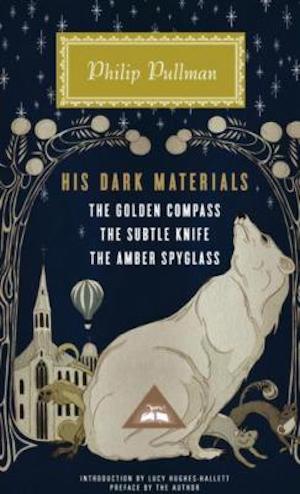
The armored polar bear known as Iorek Byrnison in Pullman’s original 1995-2000 trilogy is a panserbjørne, a sentient warrior race as smart as humans—and who even have thumbs, but no daemons. (To them, their armor is their soul.) Iorek had been king of the armored bears of Svalbard, but lost his crown and his place in society after killing another bear during a fight. Human Lyra helped him get back on his feet and to find his armor again, after which he became an ally and a friend (though a gruff one, at that).
Memoirs of a Polar Bear by Yoko Tawada

(Translated into English by Susan Bernofsky) Speaking of polar bears—2016’s Memoirs is an epic story of three generations of anthropomorphic polar bears, beginning by following a circus performer in the former USSR who becomes an author and is able to escape the Soviet state. The refugee’s daughter Tosca ends up in another circus act in East Germany, while Tosca’s son ends up being raised in the Berlin zoo. Much of the story beyond that queries what the role of a sentient bear is in human society, and the split identity of celebrity and personality.
The Hobbit by J.R.R. Tolkien
One of many creatures in the Tolkien menagerie, Beorn is a “skin changer” in the 1937 book—a very large human who can become a very large black bear. When Bilbo, Gandalf and the Dwarves arrive on their quest to reclaim the Lonely Mountain kingdom, he hosts them and assists with their supplies. Later on, Beorn joins the Battle of Five Armies and helps to defeat the Goblin army. He later sired a line of similar shape shifters, though only the men were able to become bears.
Borne by Jeff VanderMeer

The grizzly bear named Mord dominates the ruins of a post-apocalyptic city that’s been taken over by biotech in this 2017 novel. Mord had once lived in the halls of the biotech organization called The Company on the city’s edges, but experiments turned him (a) five-story-tall massive, and (b) able to fly—which meant escape was inevitable. Now he tramples around the city but also still has to sleep, which is when protagonist Rachel searches through his fur for bits of biotech tangled within and finds a strange plant-like creature she calls “Borne.”
The Wayfarer Redemption by Sara Douglass

Featured in Douglass’ 1997-1999 trilogy, Urbeth is a great ice bear who is both The Enchantress and mother of five children who then gave rise to the various peoples of Tencendor. They all have various relations with magic (or the rejection of it), and a pair of twins live in the Northern Wastes, then later battle the Timekeeper Demons—but in their spare time, often take the form of white donkeys.
The Panda’s Dream by Lawrence M. Schoen

Ailuros is a panda who lost his job as a space station cargo master and once spent an afternoon babysitting a Fant—an elephant-like creature featured in Schoen’s Barsk series. Though Ailuros is again gainfully employed as the stationmaster, he still has flashback dreams to that day of Fant-sitting years earlier. Learning that his dreams are harming his work, the Alliance insist he speak with a capybara therapist who may be able to not just help him, but use those dreams to reshape reality.
The Right to Arm Bears by Gordon R. Dickson

Arm Bears is a collection of two of Dickson’s novels (Spacial Delivery and Spacepaw) and one short story (The “Law-Twister Shorty”) that take place on Dilbia—where humans and the alien Hemnoids try to convince the locals to let them use their planet as a space station. The locals? A native bear(ish) population that are nine feet tall, love physical interactions and disdain machines. Clearly Dickson had an affinity for bears, because he also published (with Poul Anderson) a collection of shorts from 1998 called Hoka! Hoka! Hoka! That feature stories about (as the book cover notes), “alien teddy bears conquer universe!”
Clearly there are more bears lurking in the forest of books out there—who else would you include?
Buy the Book

Leave No Trace

who is the article art at top by?
The giant cybernetic bear, (also named) Shardik, in Stephen King’s, The Dark Tower III: The Waste Lands, is one of the 12 guardians of the Beams that hold up the Dark Tower.
Also, the 1979 horror novel, Prophecy, by David Seltzer, which features a mutated bear as a monster born from industrial pollution.
A few examples that come to mind from a variety of SFF media that I have consumed:
-The werebears from the novel Paladin’s Strength by T. Kingfisher;
-The White-Faced Bear from the webcomic Wilde Life;
-Brother Bartholomew from the podcast Old Gods of Appalachia.
The Phillip Pullman and Yoko Tawada books came straight to my mind, but I can’t really remember the bear from The Hobbit.
Hiromi Kawakami could be included in this list, for a short story, though. She could be included in almost any list, I’d dare say.
The Oogar in The Four Horseman Universe spring to mind
Although they are closer to teddy bears, I would add the Hoka, created by Poul Anderson. The Hugo-winning story, Exploration Team, by Murray Leinster, has several genetically engineered Kodiak bears.
The Hokas are mentioned at the end of the article above.
The Ulru-Ujurrians from Alan Dean Foster’s Humanx Commonwealth series might qualify; like the Dilbians and the Hokas, they are extraterrestrials, but are described as bearlike.
It might also be appropriate to note the story “Bears Discover Fire” by Terry Bisson.
See also Daughter of the Bear King (1987) by Eleanor Arnason. A middle-aged woman living in present-day Minneapolis is transported to a secondary world where she learns she is the Bear King’s heir, can herself shape-shift into a bear, and is needed for a world-saving mission.
Does this count?
Bears Discover Fire – Lightspeed Magazine
Terry Bisson’s story has always been one of my favorites.
Any East of the Sun, West of the Moon retelling will have a bear character, although its usually a prince in disguise: East by Edith Pattou and Ice by Sarah Beth Durst.
Likewise any version of “Snow White & Rose Red” (I particularly like the Patricia Wrede retelling of that one).
Hiero’s Journey (and its sequel The Unforsaken Hiero) by Sterling Lanier feature Gorm, a telepathic, young black bear who accompanies our hero, Hiero, across a post-apocalyptic landscape. Fun stuff!
There’s also Margo Lanagan’s book Tender Morsels.
I’d add my own Demons of the Past space opera trilogy, which includes Dr. Guvthor Hok Guvthor, a slightly anthropomorphic bearlike alien of the species called Thovians. A brilliant astrophysicist and also a cheerful combatant, Guvthor is one of the most valuable—and for a while, mysterious— allies of the central character, Captain Sasham Varan.