







Life after Pluribus feels pretty lonely. Expectations were high for Vince Gilligan’s next show, and Pluribus has quickly proven to be one of the best new sci-fi series since Severance. Yes, Pluribus was heavily inspired by numerous genre works that came before (most notably Invasion of the Body Snatchers), but the show’s vision of a post-apocalyptic landscape run by an intergalactic hivemind has rarely been exactly what you think it’s going to be. The twists, the dark humor, the quiet moments of reflection, absolutely everything that Rhea Seehorn does… there really is nothing quite like Pluribus.
If you are struggling to fill that Pluribus-shaped hole in your life, though, then your best option may be to pick up a book. It’s not only appropriate given that Pluribus protagonist Carol Sturka is a romantasy writer (more on that in a bit), but there are some tremendous novels that present their own fascinating visions of unusual doomsday scenarios while offering at least an element of what makes Pluribus so special (as well as their own charms).
Severance by Ling Ma (2018)
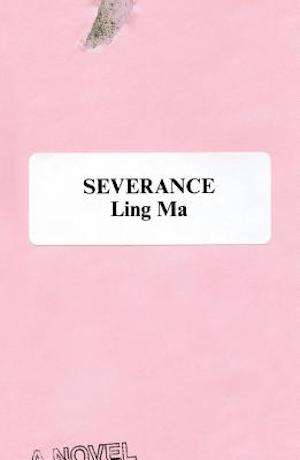
A mysterious illness is tearing through the United States. The infected continue to live their lives, but only as a shell of their former selves. With no cure in sight, a young woman named Candace and other immune survivors navigate an uncertain future. Like Pluribus, Severance imagines a different kind of apocalypse in which the world continues to spin and efforts are made to retain “normalcy” even as such a concept begins to feel increasingly absurd.
The Seep by Chana Porter (2020)

Earth is upended by the arrival of an alien force known as the Seep. Their takeover is swift, but proves to be oddly peaceful. Much of Earth becomes an unlikely kind of utopia in which the Seep connect people and gift them with the knowledge that anything is possible. In that world, a trans woman named Trina Goldberg-Oneka and her wife Deeba embark upon a mind-bending journey of self-discovery. There’s a fever dream quality to The Seep we haven’t seen in Pluribus yet, but it too raises incredible questions about what is lost and gained when our identities are blurred.
All Better Now by Neal Shusterman (2025)

Stop me when you’ve heard this before, but All Better Now imagines what would happen if humanity were suddenly infected by a virus that washes away all negative feelings and leaves everyone feeling entirely happy. Yes, Pluribus drew connections to All Better Now before its release, and both certainly deal with the downsides of what initially appears to be a utopian (if disturbing) scenario. Spoiler alert, but it turns out a little conflict can go a long way.
The Wall by Marlen Haushofer (1963)

Many post-apocalyptic stories (including Pluribus) deal with the pain of isolation. Few address that theme as overtly and effectively as Marlen Haushofer does in The Wall. It follows a woman who suddenly finds herself cut off from the rest of the world by an invisible wall that mysteriously appears one day. Her time is then spent trying to find a way out, making the most of the world around her, and, gradually, trying to accept her circumstances. It’s a powerful examination of our relationship with other humans, nature, and the sheer will to survive at the heart of it all.
The Host by Stephenie Meyer (2008)

Imagine, if you will, what may happen if we were all taken over by an invading force of parasitic beings known as “souls.” Most of the world is essentially hijacked by these creatures, but your invader has a harder time taking over your body. Instead, you and your invader engage in a prolonged battle of wills that ends up impacting both of your fates as well as the rest of the world. That core premise drives Stephenie Meyer’s The Host: a novel that overtly deals with the relationship between the body and soul while emphasizing the value and scarcity of a true home.
The Age of Miracles by Karen Thompson Walker (2012)

The Age of Miracles is one of those fascinating sci-fi novels that explores the effects of a quieter kind of extinction. Here, the inciting event is an unexplained phenomenon that causes the world to spin more slowly than before. The immediate results are fairly trivial things like slightly longer days. As the effect continues and escalates, though, people begin to react to it in drastic (though not altogether shocking) ways. Much like The Leftovers, the hooks in this page-turner come not from its biggest moments but rather by watching how the people caught at the center of it all gradually reshape their lives as well as the world around them.
The Bees by Laline Paull (2014)

There are many sci-fi stories that deal with the concept of a hive mind, but there are few such stories quite like The Bees. That’s because its protagonist is an actual bee living in a literal hive. It sounds gimmicky, but it’s so much more than that. Often compared to Watership Down, The Bees is an adventurous exploration of both the intricate inner workings of a collective (which often reads like palace intrigue) and the power of an individual life within that environment.
Station Eleven by Emily St. John Mandel (2014)

Station Eleven is a story about what keeps us going. Not just the instinct to survive, but the idea that life (much less civilization) must include things that are finer and greater than our primal needs and urges. The “present day” chapters of Station Eleven largely focus on a group of traveling performers trying to bring hope and joy to the world through art and entertainment. Their adventures are juxtaposed with flashbacks of the terrifying early days of the deadly flu that wiped out much of society, which underscore both how much was lost and the importance of finding it again. As a bonus, Station Eleven received an exceptional HBO adaptation that remains tragically underrated, partially due to its proximity to our own global pandemic.
The Midwich Cuckoos by John Wyndham (1957)

A classic of the genre that was later adapted into the Village of the Damned movies (one of which was great, one of which was… well, we still love John Carpenter), The Midwich Cuckoos is often described as a cozy kind of catastrophe. Granted, that’s an odd way to describe a story featuring villainous children inexplicably born across the world in droves following the appearance of a mysterious object in the sky. Yet, there is something darkly quaint about this story of a powerful group that nefariously works its way into our world which recalls some of Pluribus’ more quiet and menacing moments.
Bloodsong of Wycaro by Carol Sturka (2025)

Finally, this list would feel incomplete without mentioning Bloodsong of Wycaro: the third entry in the Winds of Wycaro series. Yes, Apple released a real section from Carol’s fictional romantasy book series in the Pluribus universe. While the section’s real author remains a mystery I’ve been trying to get to the bottom of, it is a remarkably entertaining standalone work that also adds a little context to the Pluribus universe. And hey, maybe it’ll be your gateway into the exciting world of pirate romantasy.
