





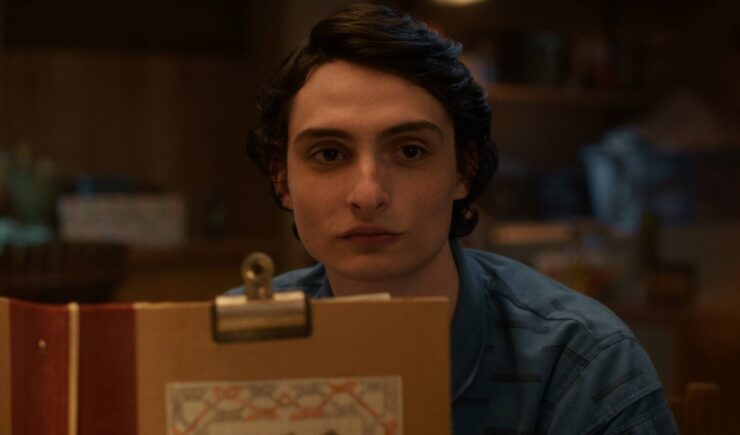
So… the Stranger Things finale was pretty good? It avoided most of the major pitfalls it had set up for itself, threaded the majority of its needles, and ended with a big dose of John Hughes and Stephen King—not the King of It or The Mist or ’Salem’s Lot, but the sappy, sometimes even treacly King of Stand by Me and The Life of Chuck.
In a world of endlessly franchisable IPs and superhero fatigue where nothing can ever truly end for its characters, Stranger Things, despite having multiple spinoffs in the works, managed to make its ending feel final, reverent, and complete. Mostly. So let’s get into it and talk about what worked and didn’t work, both in the finale and the series as a whole…
Natural Twenty: Queerness
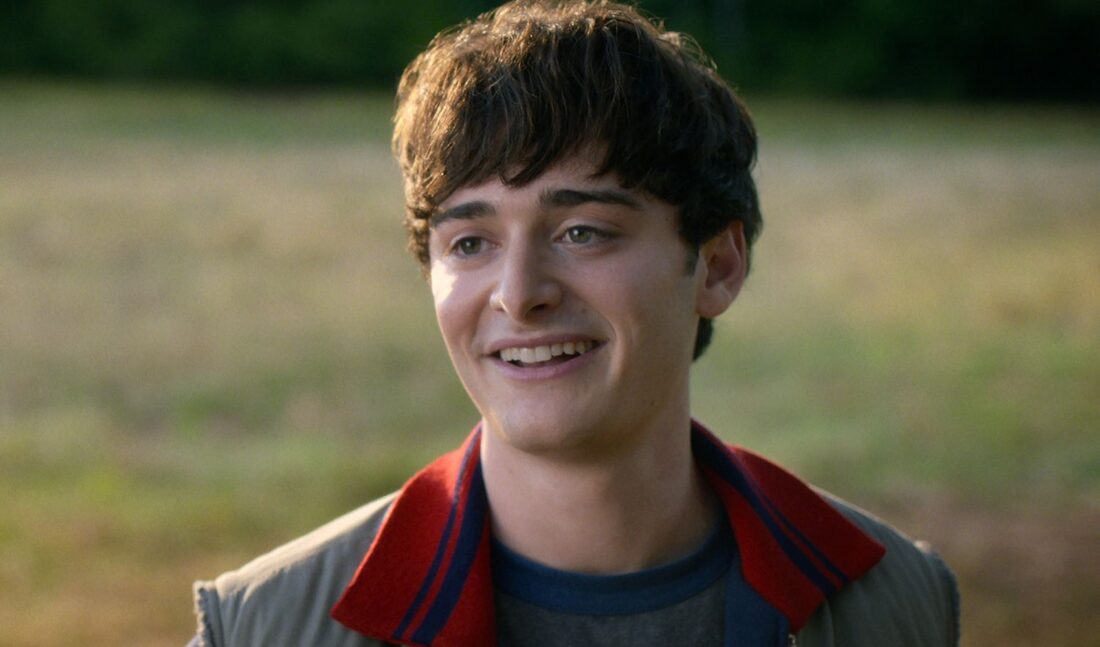
In the end, Stranger Things came through in its representation of queerness. Between Robin and Will, the show managed to have marginalized characters (eventually) be centered, thoughtful, and happy. Even though Will’s coming out scene ultimately feels like it was written as a laundry list of ’80s nostalgia experiences (I’m just like you! I also love capitalist products and mainstream pop culture!), it’s pretty heartwarming, even if the show makes it a little weird by having Will come out not only to his closest friends and family but also his brother’s girlfriend’s ex-boyfriend who he’s never spoken to, his physics teacher, and a random conspiracy theorist/smuggler.
But if there were some hitches in the lead-up to the finale, the show does an excellent job in how it chooses to end Will’s story. In Mike’s hopeful narration for what he wants for his friends, we see Will, sometime in the early ’90s, in a bar that, if not a gay bar, is certainly queer-coded, meeting up with a boyfriend. Mike’s narration is clear that the sort of ending Will deserves is only available far away in “the bustling city of Vallaki” (we could nitpick here and say that Vallaki is hardly a bustling city in the Ravenloft adventure they’re playing and also note that it was only added with the 2016 publication of Curse of Strahd, but let’s get back to Will). There is a definite cut against the wish fulfillment fantasy of Will finding happiness in Hawkins with the friends he’s grown up with. But that is part of the magic of coming out for those lucky enough to be able to leave their bigoted small towns behind—the world is much larger than where you grew up, and there are better people in it than you thought possible.
Natural One: Thinking About Race
My surprise at how well Will and Robin’s character arcs worked out is, in part, because the show handled race (and, to a lesser extent, gender) with less-than-deft hands. In general, this took the form of ignoring race entirely. Other than one or two unfollowed-up-upon racist comments aimed at Lucas and Erica (mostly in earlier seasons), the fact that they are Black in rural, mid-’80s Indiana seems completely immaterial. See my previous discussion of season four for some further exploration of the ways in which the show really doesn’t seem to understand Lucas and privilege.
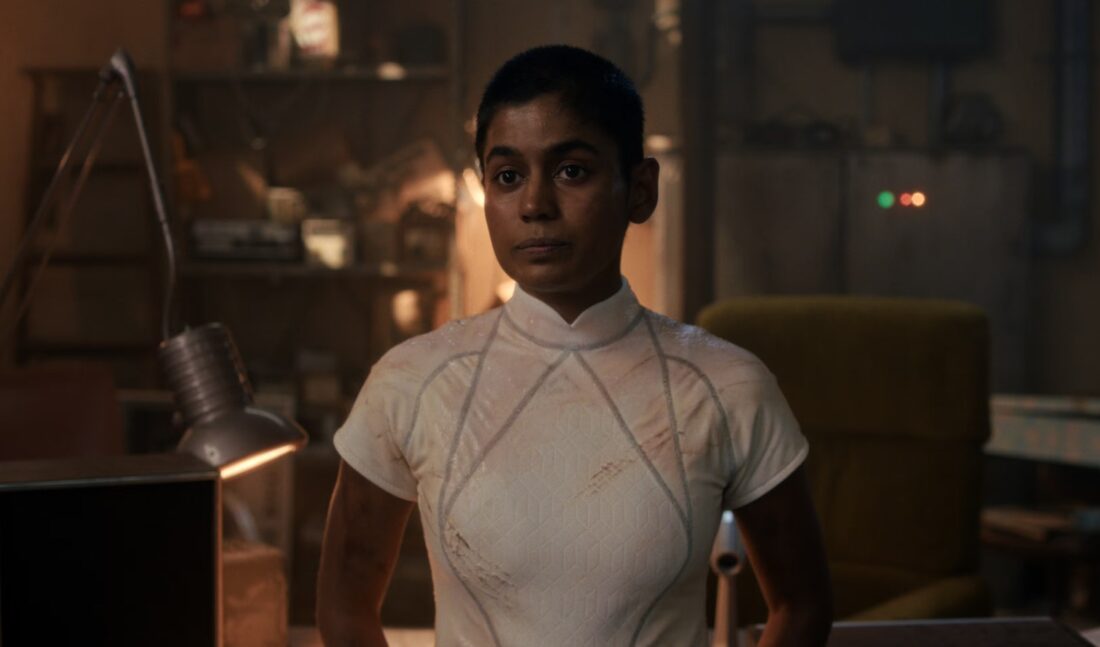
The finale follows up on this vague lack of understanding about its characters of color with its treatment of Kali/Eight (really? Kali?). While I do think that bringing her back showed an admirable commitment to not simply memory-holing plot points that didn’t fully work in previous seasons (I will also admit to some malicious glee at seeing Kali’s gang of too-quirky misfits and lazy punk stereotypes getting gunned down), the show seemed to never fully acknowledge that Kali’s outlook might have been partially shaped by being a woman of color in a hostile nation. The fact that Stranger Things not only uses her as their annual sacrifice-a-secondary-character-to-provide-drama figure but also places the nihilistic argument that she and Eleven both have to die in order to put an end to the government’s experiments in Kali’s mouth feels simultaneously ahistorical, cruel, and more than a little bit tone-deaf given the Duffer Brothers’ misunderstandings of how race in America worked in the ’80s and still works today.
As a final note, it also feels more than a little weird that Kali’s death is partially the result of Hopper choosing to leave her behind when she and El are both incapacitated by the military’s sonic weapons. It feels in character for Hopper and he does, eventually, go back for her, but it does so in a way that seems like it needed to be discussed and reckoned with later. Because it’s the finale, there isn’t time to do so. But we are left with a character of color sacrificing themself so that a white character can live, and this is made more troubling because it comes at the end of a long line of some uncomfortable characterizations that make me less generous in assessing the finale.
Critical Hit: A Lack of Wish Fulfillment

I’ve long complained about the plot armor of Stranger Things protagonists and the ways in which the show often compromised an interesting story to work in a bit of wish fulfillment or a badass sequence. To its confounding credit, the finale managed to avoid almost every pitfall it looked like it was setting itself up for. It pulled back from the inclination of breaking up Nancy and Jonathan so that she could get back together with Steve; it resisted giving Will a last-minute love interest so that everyone could be paired off; it left Robin and Vickie’s relationship up in the air (Robin makes mention of an overbearing significant other in her final scene, but that may or may not be Vickie); and it refused to give Mike or Hopper any clear sign that Eleven had survived.
But, more than just resisting its worst impulses, the show leaned hard into the uncertainty of growing up. For the D&D group, we have Mike’s hopes for his friends, paired with footage that seems to confirm these hopes without actually giving us proper epilogues. It asks us to want happy endings and to suggest they are possible, but never goes so far as to goofily mandate them. For the older kids, we get a rooftop meeting where they promise to always remain in one another’s lives despite how much they already seem to be drifting apart. It’s the sort of scene that plays, for adult viewers, as the last time these characters will all be in the same place at the same time. Perfectly underscored by Cowboy Junkies’ “Sweet Jane” (my favorite needle drop in the entire show), it’s elegiac and fulfilling, even as it refuses to assure us that these relationships will continue.
And that all dovetails with Eleven’s possible escape from her apparent death. There’s a plausible explanation for how she might have survived and there are enough clues in the moment that seem to support it (the illusory Eleven doesn’t have a nosebleed or her Hawkins Lab tattoo). And, while the revelation that a central character may secretly be alive could invite a certain amount of eye-rolling, this honestly feels like the perfect way to let go. She is forever barred from finding her friends or family but she gets to start anew. Mike gets to move on and live a somewhat normal life. Hopper finally has to process the grief of losing Sarah and Eleven, in telling him that she isn’t a replacement, gifts him the ability to live a life that isn’t spent in the shadow of a child he believes he failed.
Critical Miss: Dr. Kay
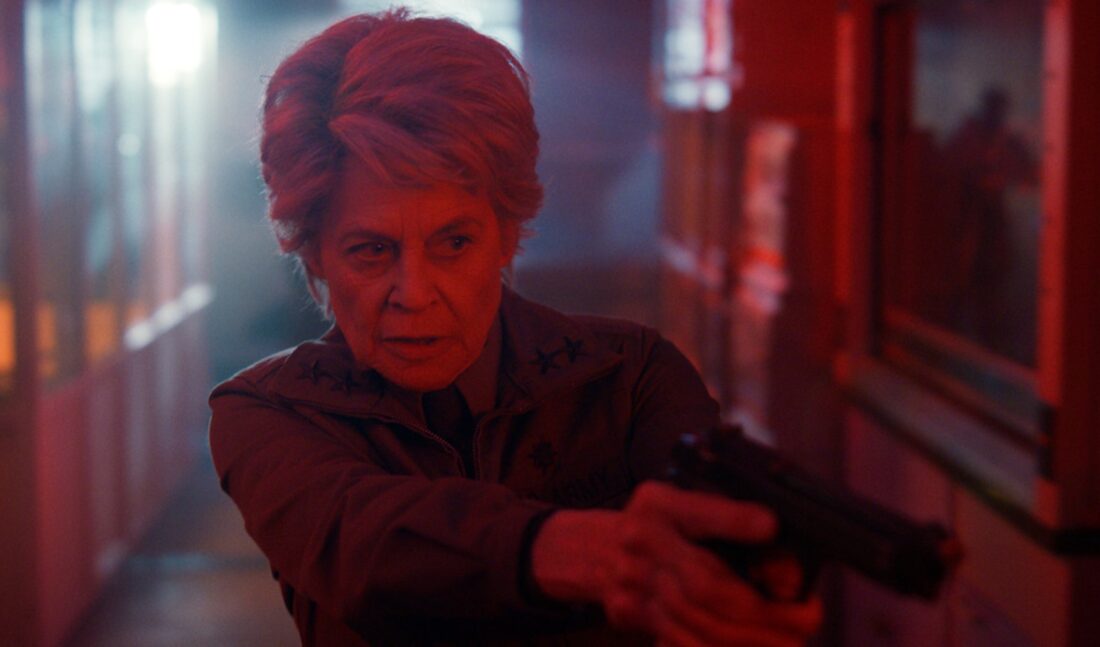
Not much to say here other than if you’re going to cast national treasure like Linda Hamilton, you have to do something with her. Much like Carey Elwes in season three, this particular bit of ’80s nostalgia stunt casting ended up squandering its considerable potential.
Critical Hit: Processing Trauma
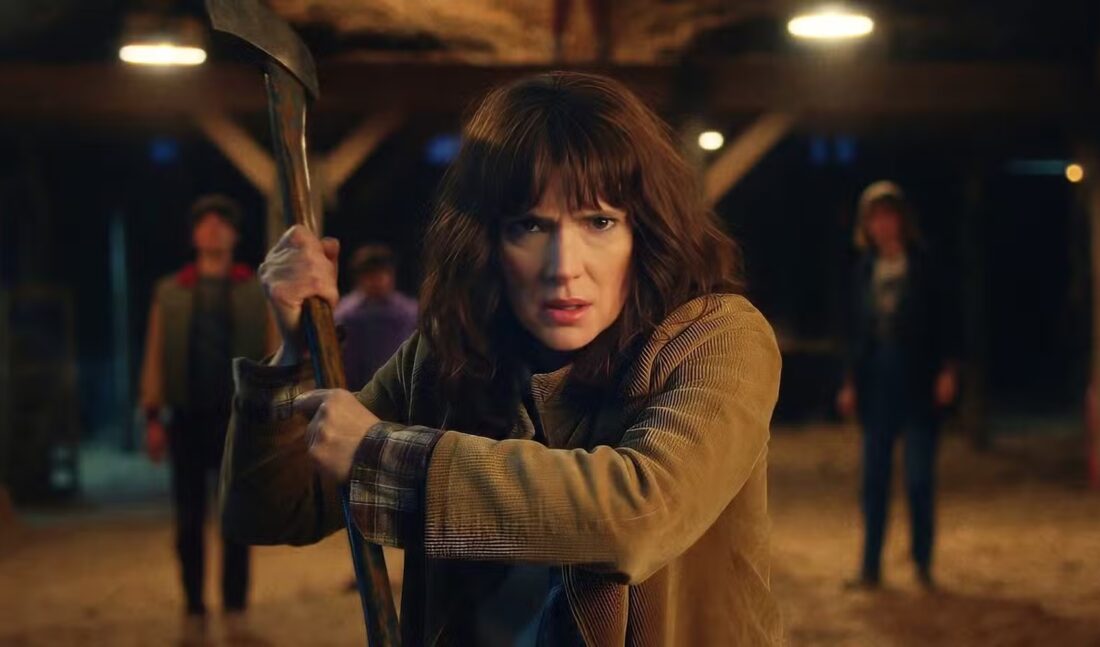
I’m not talking about Joyce’s “you fucked with the wrong family.” That line seems to be yet another listless stab at the iconic “Get away from her, you bitch” moment in which Ryder’s esteemed Alien franchise costar faces off against the Xenomorph queen (and which has been redone to the point of parody—over and over again. Besides, Nancy being styled like Ripley and kicking ass with a shotgun feels like a much better homage). But, as Joyce hacks off Vecna’s head, the show flashes to each of the main characters in turn as they consider the awful things they’ve endured. Their expressions aren’t about closure—the characters are, if anything, triggered by what they are seeing. The deaths, abuses, indignities, and gaslighting they have suffered though are still very present and it’s clear that the show ends only as the healing begins…a long and arduous journey outside of the purview of the finale itself.
The whole thing pairs nicely with the end of Will’s arc as a survivor. In the finale, we learn that Henry Creel is not the mastermind puppeting the Mindflayer, but rather another victim who became a forced accomplice over years of abuse and torture. When Will discovers this, he draws the obvious parallel—“you’re just like me”—but Henry scoffs at this, too far down the path of capitulating to monstrousness to imagine the possibility of redemption. A last-minute face turn from Vecna would have been unbearable, but allowing Will to empathize with him is the final proof of his moral convictions. It’s a great end to Will’s journey towards self-acceptance and an ameliorating corollary to the show’s idea that nostalgia comes from trauma observed at a temporal remove.
Critical Miss: Tie-ins with the Play
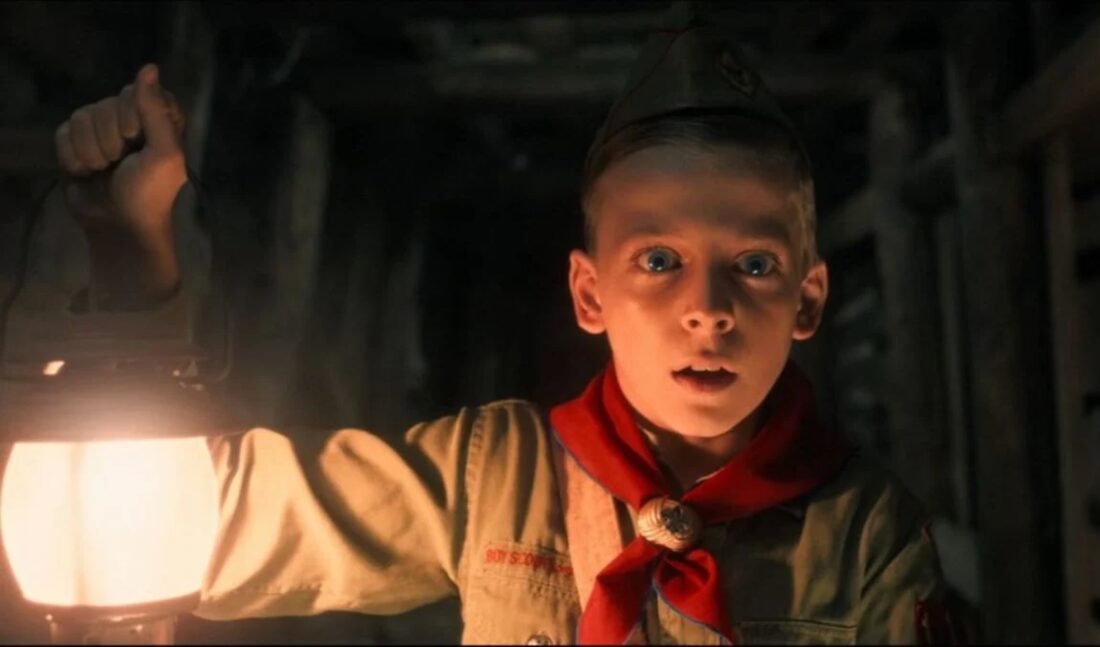
From everything I’ve heard, Stranger Things: The First Shadow is a real mess. Like Harry Potter and the Cursed Child (which was also co-written by The First Shadow playwright Jack Thorne), it’s a lot of spectacle and nostalgia crammed with as many references to its source material as possible. Like the laziest of fan fiction or the most soulless of corporate cash grabs, it risks ruining its plot by obsessively tying itself in with a more beloved story—in this particular case, by making Henry Creel a high school classmate of Joyce, Hopper, the Wheelers (weirdly retconning the fact that Ted Wheeler is supposed to be significantly older than Karen), and Sean Astin’s Bob Newby. With Creel firmly tied in with Hawkins Lab and the Creel family massacre being a part of the town’s mythos, it truly makes no sense that Henry is also the old classmate of two of the show’s main characters.
It’s even weirder that the show both doubles down on the canonicity of the play while never once acknowledging that Joyce decapitates her old drama club buddy. As a result, the Stranger Things finale feels like it’s both paying off plot points it didn’t set up (like Joyce’s profoundly weird school play set) while also treating previously available information like it’s a reveal (Henry’s experiences in the cave are detailed in the play but have to be treated as new information because of how few show viewers had actually seen it). That’s pretty messy. And, again, this all feels like it’s in service to a play that was largely panned for everything unrelated to set design and visual effects. The inclusion of that material makes the show more confusing at best and much, much less compelling at worst.
In Conclusion
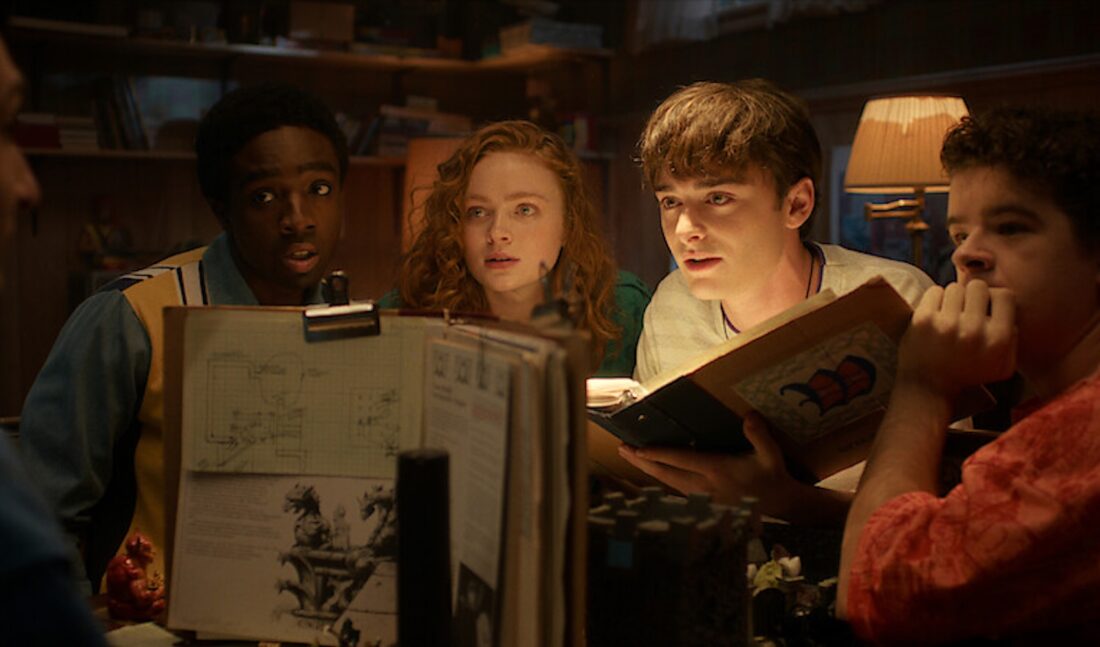
All in all, Stranger Things stuck its landing better than I could have possibly imagined. There might have been some low expectations going into season five, but the show managed to treat its characters with respect while never sinking into the pointless, fan-service reverence that previous seasons seemed to be angling towards. It played its nostalgia for pathos rather than winking reference and was, in the end, the ending to a much better show than it had been in ages. But what do you think? Did it satisfy your craving for Stephen King-esque ’80s horror? Did you also like the eleventh-hour reference to Krull where the final fight with the monster takes place inside the brutalist body of a larger monster? What were your favorite or least favorite parts of the whole thing? Let me know in the comments!

Eleven’s entire potential-suicide arc was completely false to where the character had gotten to in her journey, and derailed four seasons’ worth of growing to value herself and get to secure connections with Mike and Hopper. The Duffers have explained it as “the magic needs to go away,” but purely Doylist motivations that aren’t backed up by believable Watsonian ones just don’t work.
Eleven had to die. The whole metaphor of the show from S1 on was that the Upside Down was created and opened by her in response to the abuse she suffered. The obvious way to heal that rift *permanently* was, as Kali told her, to die.